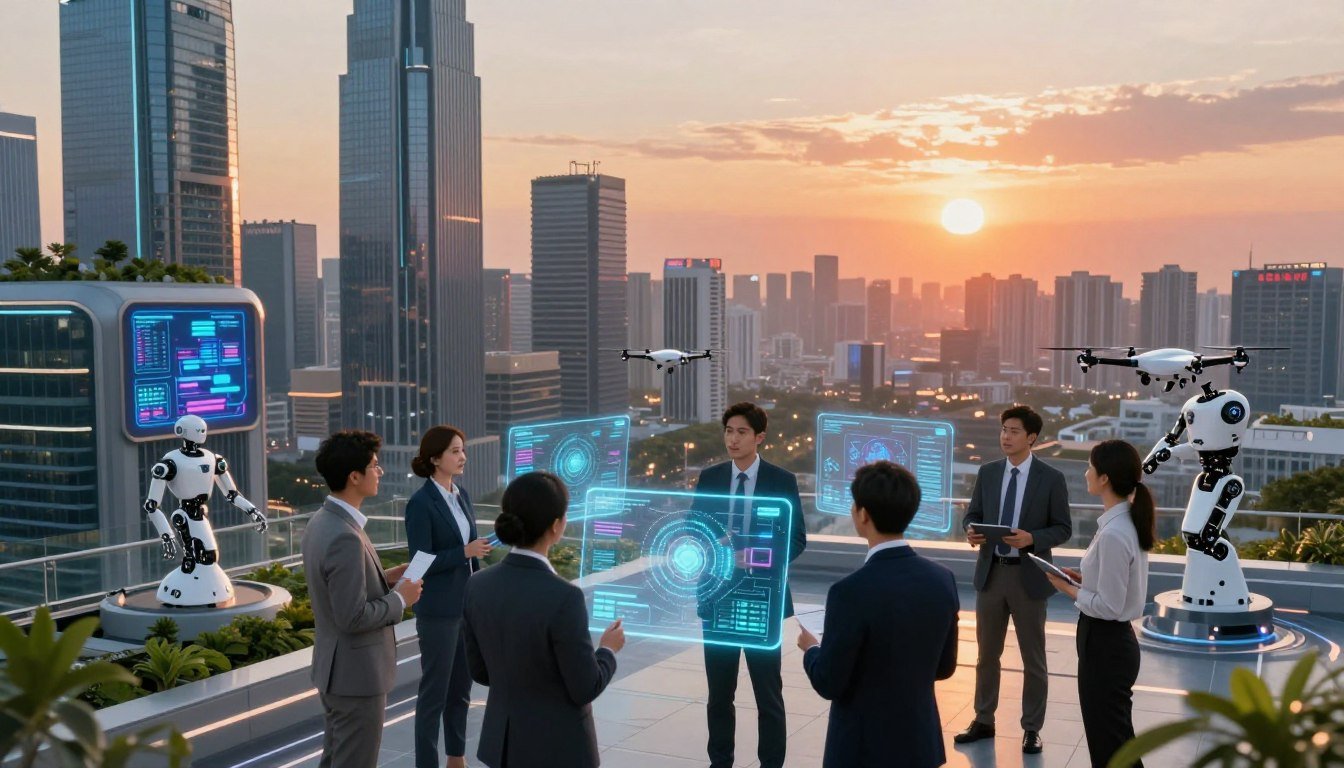
Explore the New AI Innovations Changing Our World
The fast growth of new ai is changing how we live and work. These changes are real, not just in science fiction.
Artificial intelligence is now a key part of our world. It runs our smartphones and big logistics systems that keep the economy going.
Today’s AI innovation is making machines do more. They help us by doing routine tasks, so we can solve problems and grow.
It’s important to understand this artificial intelligence change. It’s shaping our future in productivity and digital connections.
This new ai world opens up many possibilities for progress. Technology is making it easier for humans and machines to work together.
Key Takeaways
- Modern technology is moving beyond theory into practical, daily applications.
- Automation is freeing up human potential for more complex, creative tasks.
- Global infrastructure now relies heavily on advanced machine learning systems.
- Understanding these shifts is essential for navigating the future digital economy.
- Innovation in this field continues to redefine the limits of machine capability.
The Evolution of New AI Technologies
The history of AI is a journey from simple logic to smart, adaptable systems. Early AI used symbolic logic, where programmers set every rule. But these systems were good only for simple tasks and couldn’t handle the real world’s complexity.
From Symbolic AI to Deep Learning
The move to machine learning was a big change. Instead of fixed rules, systems learned from data. This made computers better over time, without needing humans to help all the time.
Deep learning is a key part of this change. It uses complex neural networks to find patterns in big data. This is why AI technology can now do things like recognize images and predict trends.
The Impact of Large Language Models
Large Language Models (LLMs) are a big step forward. They understand text in a way that’s almost like humans. They can even create responses that sound like they were written by people.
- Contextual Understanding: LLMs get the connections between words.
- Scalability: They can do many tasks, from translating to writing stories.
- Efficiency: They make it faster to get information and create content.
Democratizing Access to Advanced Computing
Before, only big companies and schools had access to powerful computers. Now, the cloud makes new ai tools available to everyone. Small groups can tackle big problems they couldn’t before.
This makes the field more competitive and open to new ideas. With easier access, we see more creative applications in different areas. The work on machine learning keeps making these tools available to more people.
Generative AI and the Creative Revolution
Generative AI is changing how we make media and software today. It lets creators do more than they could before. This digital transformation helps them focus on big ideas, not just the details.

Redefining Content Creation and Media
Creating visual and written content is getting a big boost. Teams use AI to make top-notch assets fast. This AI innovation helps brands stay consistent and grow their reach.
- Automated generation of marketing copy and blog posts.
- Rapid prototyping of visual concepts and storyboards.
- Dynamic video editing and automated color grading.
AI-Assisted Software Development and Coding
Developers are seeing big improvements in their work thanks to AI. It helps write code, suggests improvements, and finds bugs early. This means teams can focus on new features, not fixing old problems.
These tools are changing how tech teams work. They let humans focus on the big picture while AI handles the details. This leads to faster, better software.
The Future of Digital Art and Design
The future of art combines human creativity with AI’s precision. Artists use generative AI to explore new ideas. It’s a tool, not a replacement for the artist.
The most profound impact of this technology is not in the automation of art, but in the expansion of what an artist can conceive and execute.
Designers will soon be more like curators and directors. With AI innovation, they can work on complex designs faster. This means the next wave of digital art will be even more amazing.
Advancements in Healthcare Diagnostics and Personalized Medicine
Healthcare AI is changing how we diagnose and treat patients. It uses lots of clinical data to give doctors unprecedented insights into patient health. This leads to more accurate and personalized care.
Predictive Analytics for Early Disease Detection
Predictive analytics helps doctors spot health issues early. It looks at patient history and genetic markers for early signs of chronic conditions. Early intervention makes treatments more effective and improves patient outcomes.
Accelerating Drug Discovery with Neural Networks
Old ways of finding new medicines took years. Now, neural networks speed up this process. They simulate how molecules interact, helping researchers find the best candidates for trials.
Robotic Surgery and Precision Patient Care
Robotic systems are making surgery better. They offer enhanced precision and stability, improving outcomes. Patients get smaller incisions, less risk of complications, and faster recovery times.
These technologies are a big step forward in healthcare. They aim to make care safer and more efficient. The future of medicine is all about combining human skill with machine smarts.
Transforming Global Logistics and Supply Chain Management
Digital transformation is key for businesses to succeed in complex global logistics. Companies use advanced technology to stay ahead in a changing market. This shift from manual to automated processes boosts operational agility.
Optimizing Inventory with Real-Time Data
Modern supply chain optimization uses real-time data to manage inventory well. These systems handle lots of info to keep stock levels right across different places. AI-driven tools help predict demand changes, avoiding losses.
Real-time tracking of goods is a big plus for global networks. Here are the main benefits of smart data systems:
- Lower carrying costs thanks to accurate demand forecasts.
- Less stockouts and overstocking.
- Better visibility in the whole distribution network.
Predictive Maintenance for Industrial Infrastructure
Predictive analytics is also crucial for keeping industrial equipment in top shape. Sensors in key machines watch performance 24/7 to spot early wear signs. This early action prevents expensive downtime and extends equipment life.
Using AI-driven methods, maintenance teams can move from fixing things after they break to planned upkeep. By looking at machine vibrations, temperature, and sounds, businesses can spot issues before they happen. This smart approach keeps logistics hubs running smoothly, supporting the global economy without hiccups.
AI in Environmental Sustainability and Climate Modeling
Climate change is speeding up, and sustainable AI is key to saving our planet. These smart systems help us manage resources better and cut down our ecological harm.
AI can now analyze huge amounts of data to forecast environmental changes with great accuracy. This AI technology is vital for those working to save species and keep ecosystems stable.
Precision Agriculture and Resource Management
Farming is getting smarter with the help of technology. Smart sensors and data help farmers check on crops instantly. This means they use resources only where they’re really needed.
The main advantages are:
- Optimized water usage to avoid waste in dry areas.
- Reduced fertilizer application, which cuts down on harmful chemicals in water.
- Increased crop yields thanks to better growth predictions.
By using sustainable AI, farming can greatly reduce its harm to the environment. This not only keeps the soil healthy but also helps feed more people as the world grows.
Monitoring Carbon Emissions with Satellite Imagery
It’s crucial to track carbon emissions to meet climate targets. AI now uses satellite images to pinpoint where emissions come from with high accuracy.
This AI technology lets us watch industrial sites and deforestation worldwide in real-time. It gives clear data, making sure companies and countries follow strict environmental rules.
Seeing carbon emissions from space helps everyone take action fast. As these tools get better, they’ll help us make real progress against global warming.
The Rise of Autonomous Systems in Transportation
The world of transportation is changing fast, thanks to machine intelligence. Autonomous systems are now a reality, changing our roads and skies. They are making a big difference in how we and goods move around the world.
Developments in Self-Driving Vehicle Technology
Engineers are working hard to make self-driving cars work in different places. They use sensor fusion to mix data from cameras, radar, and LiDAR. This helps cars see their surroundings better and stay safe on the road.
AI-Driven Traffic Management Systems
AI-driven systems are also changing how cities work. They use real-time data to adjust traffic lights and routes. This helps reduce traffic jams and makes our commutes greener.
Innovations in Autonomous Drone Delivery
Drone delivery is changing the logistics world. Autonomous drones can now deliver packages quickly and accurately. They avoid traffic, making delivery faster than ever before.
Ethical Considerations and Governance in the Age of AI
As artificial intelligence becomes more part of our lives, we need strong ethics more than ever. Developers and policymakers must make sure these tools help everyone without causing harm. It’s key to keep public trust in AI by focusing on AI ethics.
Addressing Algorithmic Bias and Fairness
One big issue today is algorithmic bias. If training data has old prejudices, the models can keep those biases. It’s up to developers to check their data to make sure it’s fair for everyone.
Using fairness metrics helps teams spot and fix biased results early. Having diverse teams helps spot issues before they start. This is crucial for AI ethics today.
Data Privacy and Security Challenges
Big data for AI training raises big privacy risks. Keeping personal data safe is a big challenge. Strong encryption and ways to hide identities are key to protect against cyber threats.
Security is a basic right in the digital world. Companies should design privacy into their systems from the start. Keeping data safe is essential for users to trust AI.
The Role of International Regulatory Frameworks
Working together globally is key for AI standards. International rules help avoid a mess of different policies. These rules aim to keep safety first while allowing innovation.
Shared guidelines help countries tackle AI risks better. They push for openness and accountability from tech leaders worldwide. A unified approach will shape the future of tech responsibly.
Future Trends and the Next Frontier of Machine Learning
We are on the edge of a big change in how we use computers and our brains together. Looking ahead, AI is moving from simple tasks to solving big, hard problems. This change is a big deal for the field.
The Potential of Quantum AI Integration
Adding quantum computing to current systems will change machine learning a lot. Old computers struggle with big data and complex math. But, quantum computers use special bits called qubits to work way faster.
- Solving complex molecular simulations for drug discovery.
- Optimizing global logistics networks in real-time.
- Enhancing cryptographic security protocols.
Advancements in Neuromorphic Computing
Scientists are also looking to nature for ideas. Neuromorphic computing copies the brain’s structure to process info. This makes computers work better and use less energy.
These systems can learn and change like our brains. This is key for the future of AI because it makes big data centers more eco-friendly. It’s a green way to keep improving computer power.
Human-AI Collaboration in the Workplace
The future job scene will be all about working together with AI. Instead of replacing people, AI will help humans do better work. This means people can focus on big ideas while AI handles the details.
Good companies will teach their teams to work with AI. Seeing AI as a team player is crucial for success in the next 10 years.
Conclusion
Machine learning is changing the world fast. It’s making big differences in healthcare and logistics. But, we need to make sure we use these tools wisely.
We must focus on using AI in a way that’s fair and safe. Companies like Google and Microsoft are leading the way. They’re showing us how to use these technologies for good.
AI should help us, not control us. We need to make sure it’s safe and fair for everyone. Working together, we can make sure AI improves our lives.
How do you think AI will change your life? Share your thoughts. Your ideas help shape the future of technology.